“All material in nature, the mountain and the stream and the air and we, are made of Light which has been spent, and this crumpled mass called material casts a shadow, and the shadow belongs to Light.”
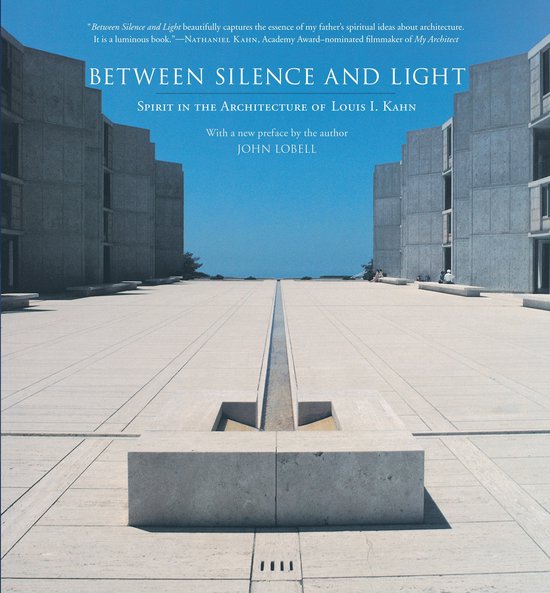
Spirit in the Architecture of Louis Kahn
John Lobell
Shambala, Boulder1979
Joy
I realized that if I were painter about to paint a great catastrophe, I could not put the first stroke on canvas without thinking of Joy in doing it. You cannot make a building unless you are joyously engaged.
I would like to feel that I have not forgotten, not have you as I speak to you, about the stream of Joy which must be felt. Otherwise, you really don’t feel anything. If what I say somehow activates that feeling, I would, of course, be terribly pleased and honored.
Wonder
From beauty, Wonder. Wonder has nothing to do with knowledge. It is a first response to the intuitive, the intuitive being the odyssey, or the record of the odyssey, of our making through the untold billions of years of making. I don’t believe that one thing started at one time and another started at another time. Everything was started in one way at the same time and it was no time either: it just simply was there.
I would like to feel that I have not forgotten, not have you as I speak to you, about the stream of Joy which must be felt. Otherwise, you really don’t feel anything. If what I say somehow activates that feeling, I would, of course, be terribly pleased and honored.
Wonder is the same feeling that the astronauts must have felt when they saw the earth at great distance. I followed them and I felt what they felt: this great ball in space, pink, or rose, and blues and white. Somehow all the things on it, even the great achievements like, let us say, Paris, a great achievement, or London, all disappeared and became circumstantial works. But the Toccata and Fugue did not disappear, because it was the most unmeasurable and therefore the closest to that which cannot disappear. The more deeply something is engaged in the unmeasurable, the more deeply it has this lasting value. So you cannot deny the Toccata and the Fugue. You cannot deny the great works of art because they are born out of the unmeasurable.
I think what you felt was just Wonder, not knowledge or knowing. You felt that knowledge was not as important as your sense of Wonder, which was a great feeling without reservation, without obligation, without accounting for yourself. Wonder is the closest intouchness with your intuitive.
The Wall, the Column
The wall did well for man. In its thickness and its strength, it protected man against destruction. But soon, the will to look out made man make a hole in the wall, and the wall was pained, and said: “What are you doing to me ? I protected you; I made you feel secure – and now you put a hole through me !” And man said: “But I see wonderful things, and I want to look out.” And the wall felt very sad.
Later man didn’t just hack a hole through the wall, but made a discerning opening, one trimmed with fine stone, and he put a lintel over the opening. And soon the wall felt pretty well.
Consider also the momentous event in architecture when the wall parted and the column became.
Architecture
I thought that Art was a kind of oracle, an aura that had to be satisfied by the artist. If the artist made something, he dedicated it as an offering to Art, as though Art were something that preceded the work. Art cannot be Art unless it is a work and not something abstract, out in the blue somewhere. The emergence of Architecture as a human expression is tremendously important because we actually live to express.
A great building, in my opinion, must begin with the unmeasurable, must go through measurable means when it is being designed, and in the end must be unmeasurable. The only way you can build, the only way you can get the building into being, is through the measurable. You must follow the laws of nature and use quantities of brick, methods of construction, and engineering. But in the end, when the building becomes part of living, it evokes unmeasurable qualities, and the spirit of its existence takes over.
Architecture has existence, but it has no presence. Only a work of architecture has presence, and a work of architecture is presented as an offering to architecture.
A work is made in the urging sounds of industry, and, when the dust settles, the pyramid, echoing Silence, gives the sun its shadow.
The Architect
The way one does things is private, but what one does can belong to everybody. Your greatest worth is in the area where you can claim no ownership, and the part that you do that doesn’t belong to you is the most precious. T is the kind of thing you can offer because it is better part of you; it is a part of general commonality that belongs to everybody. You feel that what you truly have to offer is in your next work, and that what you have done is always incomplete. I believe than even a great composer like Bach, who did everything as though it belonged to everyone else, died thinking he did nothing, because a person is greater than his works. He must continue.
I believe it takes a long time to be an architect; it takes a long time to be the architect of one’s aspirations. You can become an architect professionally overnight. But to feel the spirit or architecture from which one makes his offering takes much longer.
And where does the architect sit ? He sits right there; he is the one who coveys the beauty of spaces, which is the very meaning of architecture. Think of meaningful space and you invent an environment, and it can be your invention. Therein lies the architect.
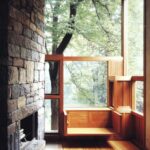
The Fisher House (1960–1967) in Hatboro, Pennsylvania.
Touch, Sight
I though then that the first feeling must have been touch. Our whole sense of procreation has to do with touch. From the desire to be beautifully in touch came eyesight. To see was only to touch more accurately. These forces within us are beautiful things that you can still feel even though they come from the most primordial, non-formed kind of existence.
From touch there is striving to touch, not just touch, and from this developed what could be sight. When sight came, the first moment of sight was the realization of beauty. I don’t mean beautiful or very beautiful or extremely beautiful. Just simply beauty itself, which is stronger than any of the adjectives you might add to it. It is a total harmony you feel without knowing, without reservation, without criticism, without choice. It is a feeling of total harmony as though you were meeting your maker, the maker being that of nature, because nature is the maker of all that is made. You cannot design anything without nature helping you.
Sight then came about and sight immediately felt the total harmony. Art, which was immediately felt, was the first word, one can say the first line, but I think the first word, the first utterance. It could have been, “Ah,” just first. What a powerful word that is. It expresses so much with just a few letters.
Order
I tried to find what Order is. I was excited about it, ad I wrote many, many words of what Order is. Every time I wrote something, I felt it wasn’t quite enough. If I had covered, say, two thousand pages with just words of what Order is, I would not be satisfied with this statement. And then I stopped by not saying what it is, just saying, “Order is.” And somehow I wasn’t sure it was complete until I asked somebody, and the person I asked said, “You must stop right there. It’s marvelous; just stop there, saying, “Order is.”
Silence and Light
Inspiration is the feeling of beginning as the threshold where Silence and Light meet. Silence, the unmeasurable, desire to be, desire to express, the source of new need, meets Light, the measurable, giver of all presence, by will, by law, the measure of things already made, as a threshold which is inspiration, the sanctuary of art, the Treasury of Shadow.
The artist offers his work to his art in the sanctuary of all expression, which I like to call the Treasury of the Shadow, lying in that ambiance: Light to Silence, Silence to Light. Light, the giver of presence, casts its shadow, which belongs to Light. What is made belongs to Light and to Desire.
I likened the emergence of Light to a manifestation of two brothers, knowing quite well that there are not two brothers, nor even one. But I saw that one is the embodiment of the desire to be, to express, and one (not saying “the other”) is to be, to be. The later is nonluminous, and the former, prevailing, is luminous. This prevailing luminous source can be visualized as becoming a wild dance of flame that settles and spends itself into material. Material, I believe, is spent Light.
Silence and Light. Silence is not very, very quiet. It is something that you may say is lightless, darkles. There are all invented words. Darkless – there is no such word. But why not? Lightless; darkles. Desire to be, to express. Some can say this is the ambient soul – if you go back beyond and think os something in which Light and Silence were together, and may be still together, and separate only for the convenience of argument.
Place
It is a decision coming from commonality that you choose a place out of all places to build, a place where others can also settle. It is a very important decision, of the same importance as the positioning of a Greek temple amongst the hills. Of all the hills, this hill is chosen for the temple, and then all the other hills beckon to it as it bowing to this decision. You do not see this eulogizing building, which is remarkable in that it has never been there before.
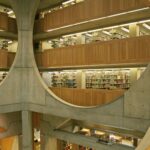
Space
Space has tonality, and I imagine myself composing a space lofty, vaulted, or under a dome, attributing to it a sound character alternating with the tones of space, narrow and high, with graduating silver, light to darkness.
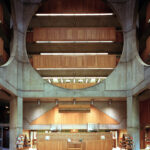
Structure
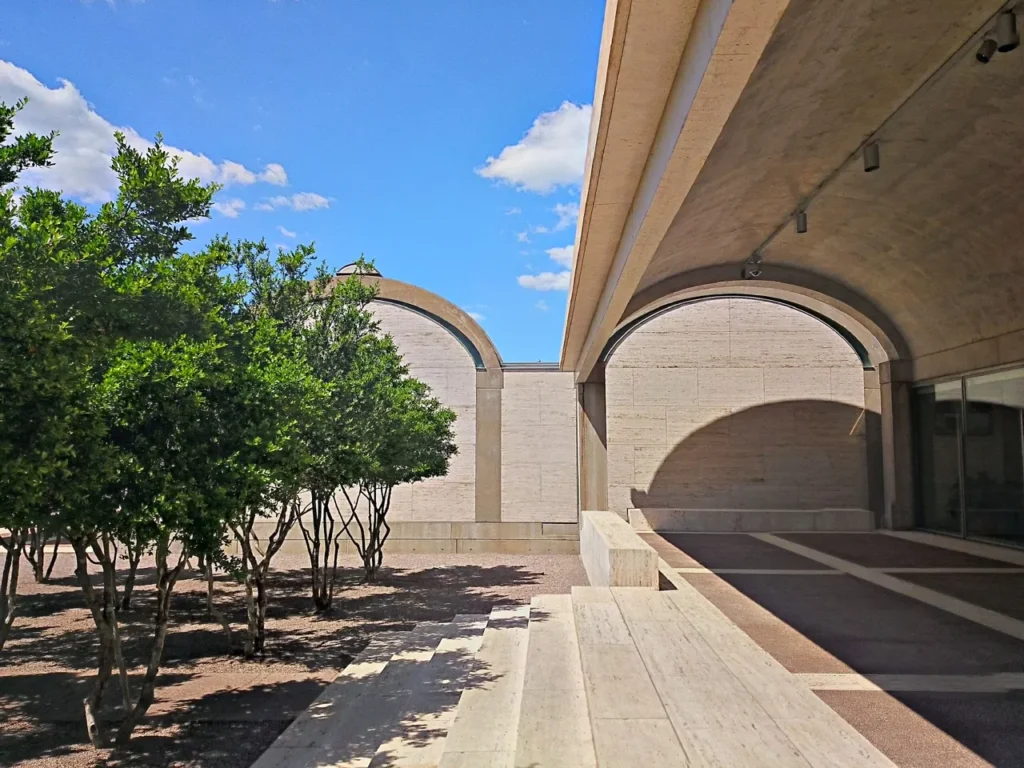
Structure is the giver of Light. When I choose an order of structure that calls for column alongside of column, it presents a rhythm of no light, light, no light, light, no light, light. A vault, a dome, is also a choice of a character of light.
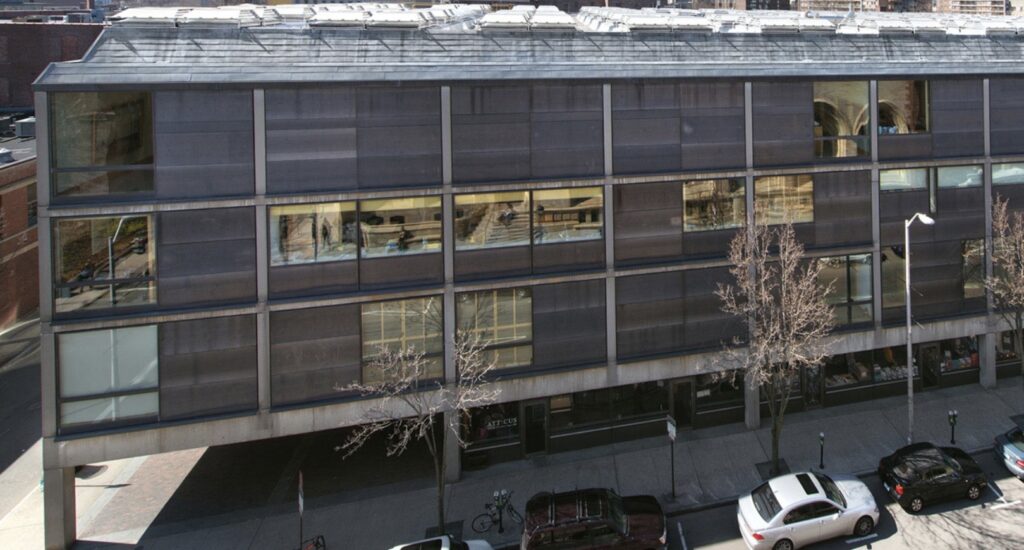
Materials
Realization is Realization in Form, which means a nature. You realize that something has a certain nature. A school has a certain nature, and in making a school the consultation and approval of nature are absolutely necessary. In such a consultation you can discover the Order of water, the Order of wind, the Order of light, the Order of certain materials. If you think of brick, and you’re consulting the Orders, you consider the nature of brick. You say to brick: ”What do you want, brick ?” Brick says to you: “I like an arch.” If you say to brick, “Arches are expensive, and I can use a concrete lintel over an opening. What do you think of that brick? Brick says, “I like an arch.”
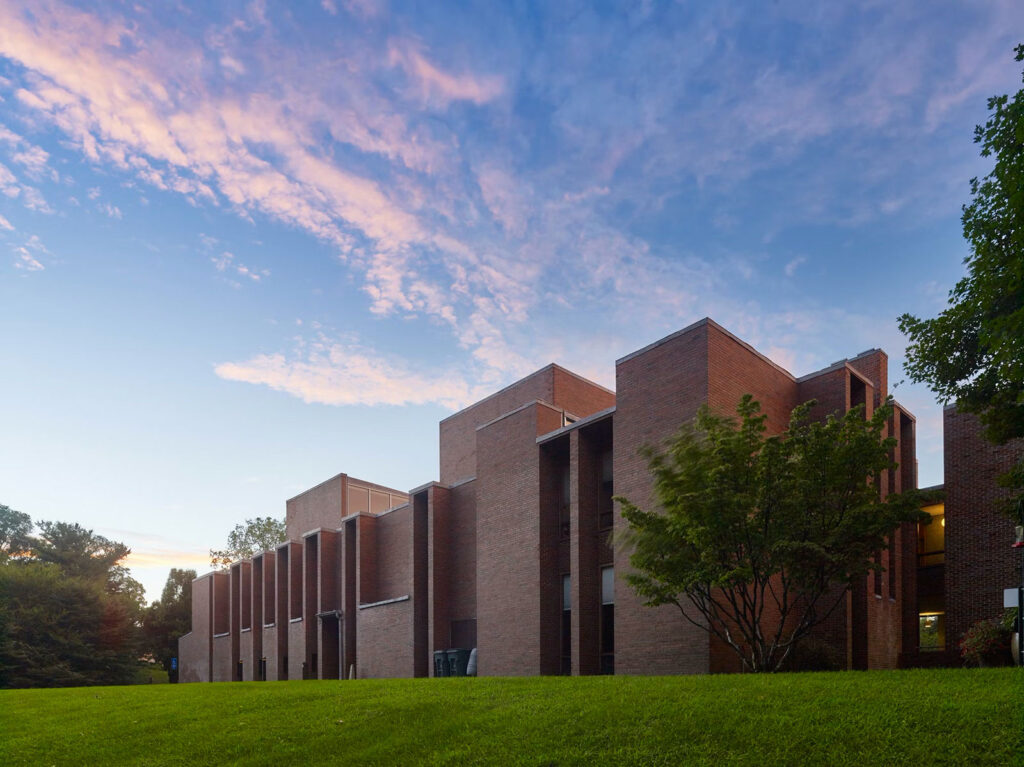
It is important that you honor the material you use. You don’t bandy it about as though to say, “Well, we have a lot of material, we can do it one way, we can do it in another way.” It’s not true. You must honor and glorify the brick instead of short-changing it and giving it an inferior job to do in which it loses its character, as, for example, when you use it as infill material, which I have done and you have done. Using brick so makes it feel as though it is a servant, and brick is a beautiful material. It has done beautiful work in many places and still does. Brick is a completely live material in areas that occupy three quarters of the world, where it is the only logical material to use. Concrete is a highly sophisticated material, not so available as you think.
You can have the same conversation with concrete, with paper or papier-maché, or with plastic, or marble, or any material. The beauty of what you create comes if you honor the material for what it really is. Never use it in a subsidiary way so as to make the material wait for the next person to come along and honor its character.
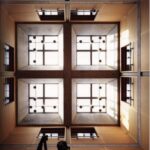
Making Something
There is a distinction between nature’s laws and our rules. We work by rules, but we employ nature’s laws to make something. The rule is made to be changed, but nature cannot change its laws. If it did, there would be no Order whatsoever. There would be what we think is chaos. The laws of nature tell us that the color, the weight, the position the pebble on the beach are undeniable. The pebble is placed there non-consciously by te interplay of the laws of nature. A rule is conscious act needing circumstances to prove its validity or its need for change.
Any rule you have is really there on trial. The greatest moment of a rule is change: when that rule comes to a higher level of realization, that leads to a new rule. To discover a new rule is to discover a new avenue of expression.
That is why dealing with aesthetics, which are the rule of art, is very dangerous. I would say that one should not employ any aesthetics. Aesthetics are realized out of the singularity of a making in which someone, sensitive to how the rules might be employed, makes an aesthetic principle. Aesthetics come after you make something, not before. You can leave aesthetics to someone else, to the architectural critic, for instance.
Now what I have said is a categorical statement, which should be forgotten, because there are those who look at it very seriously another way. But let them think of it that way. I think of it this way because I can work this way and others can work their way. Therein lies the beauty of people, within whom the greatest completeness of an odyssey of their making exists, beautiful in so may ways.
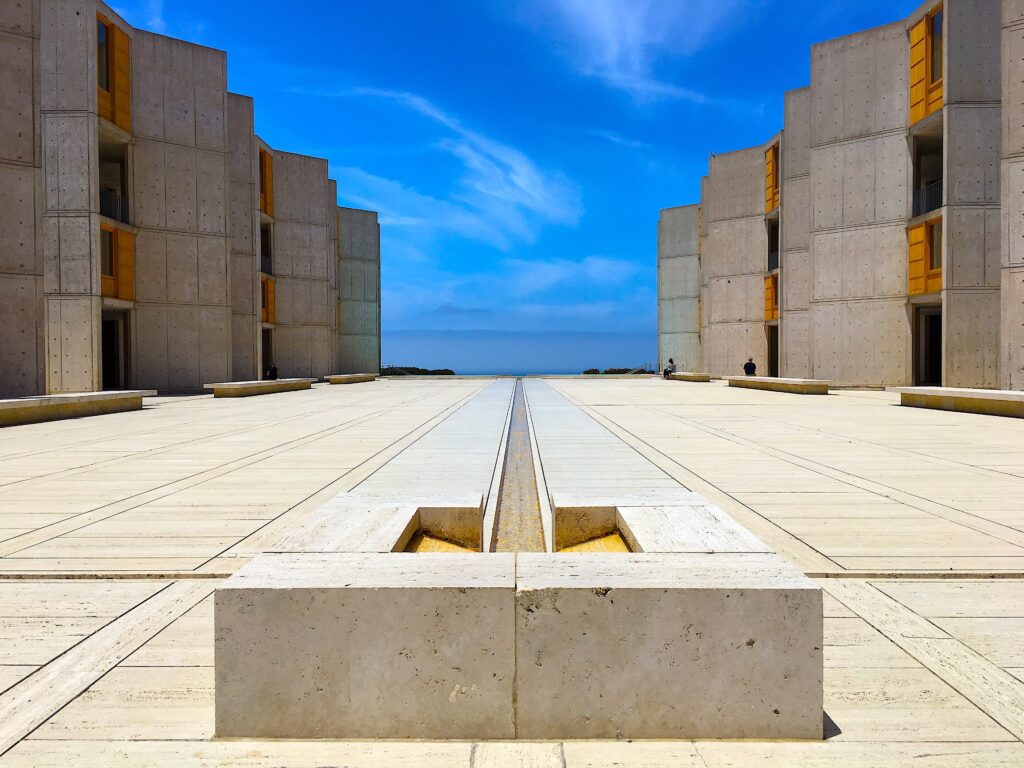
Form and Design
With the sense of Wonder comes Realization. Realization is born out of the intuitive. Something must be just so, and it has a definite existence though you cannot see it. You strive because the existence makes you think of what you want to express. In this drive to express, you make a distinction between existence and presence. When you give something presence, you have to consult nature, and that is where Design begins.
Design gives the elements their shape, taking them from their existence in the mind to their tangible presence. Design is a circumstantial act. In architecture, it characterizes a harmony of spaces good for a certain activity.
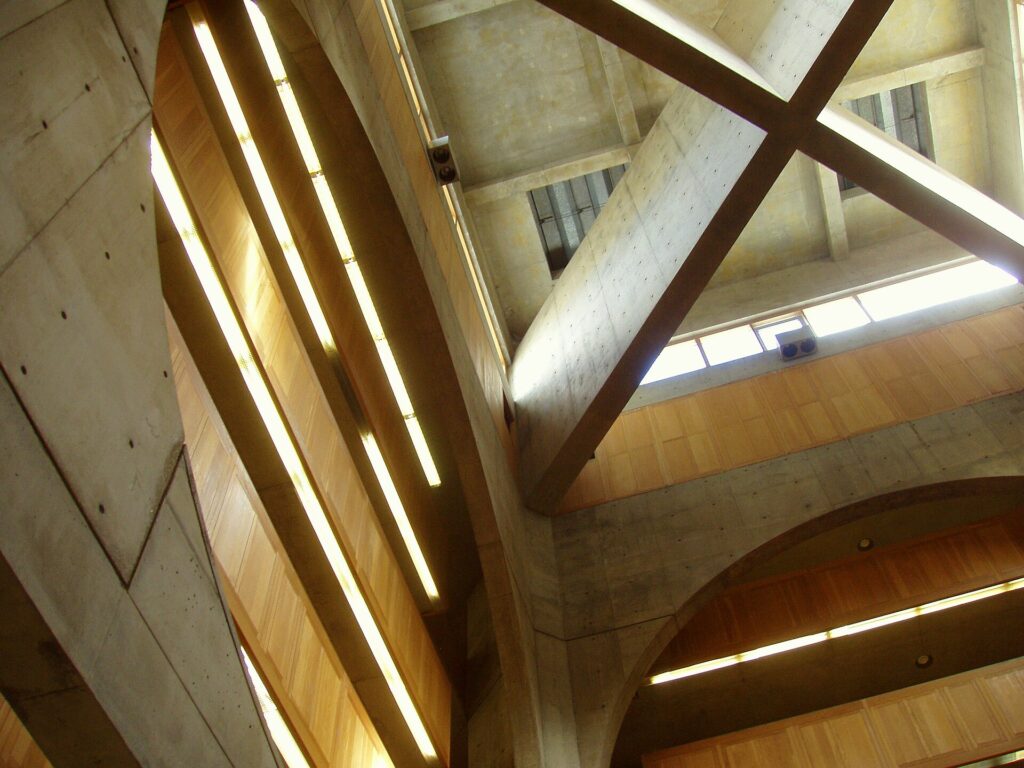
Light
I gave myself an assignment: to draw a picture that demonstrates light. Now if you give yourself such an assignment, the first thing you do is escape somewhere, because it is impossible to d. You say that the white piece of paper s the illustration; what else is there to do? But when I put a stroke of ink on the paper, I realized that the black was where the light was not, and then I could really make a drawing, because I could be discerning as to where the light was not, which was where I put the black. Then the picture became absolutely luminous.
I said that all material is nature, the mountains and the streams and the air and we, are made of Light which has been spent, and this crumpled mass called material casts a shadow, and the shadow belongs to Light.
So Light is really the source of all being. And I said to myself, when the world was an ooze without any kind of shape or direction, the ooze was completely infiltrated with the desire to express, which was a great congealment of Joy, and desire was a solid front to make sight possible.
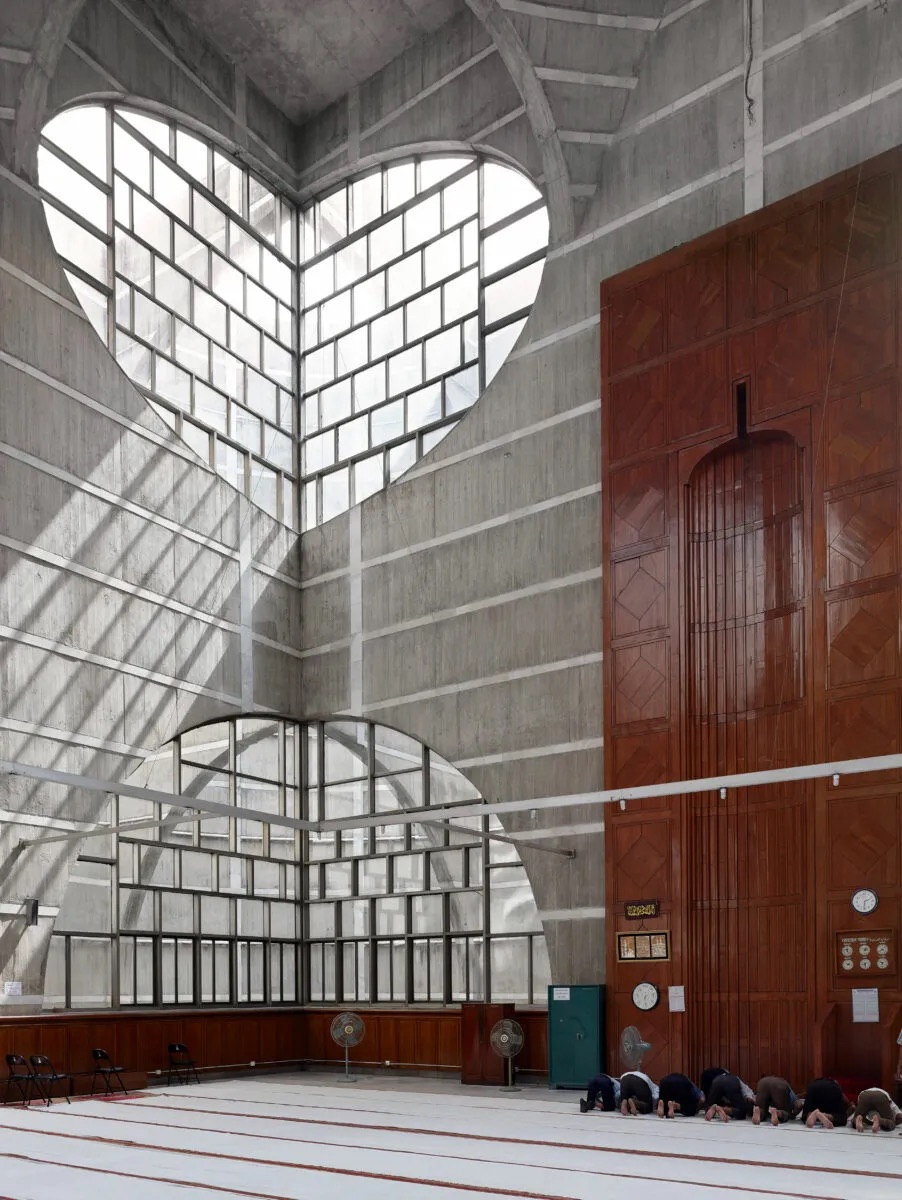
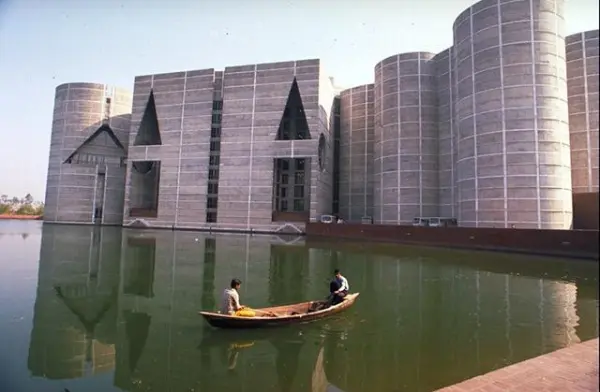
Dit is het interieur van de gebedsruimte in het Jatiya Sangsad Bhaban (Parlementsgebouw) in Dhaka, Bangladesh. Het gebouw is een meesterwerk van modernistische architectuur, ontworpen door de Amerikaanse architect Louis Kahn. De constructie werd voltooid in 1982

| EINDE |